Initial Publication Date: September 15, 2026
DOI | Cite this

2025 Outstanding Earth Science Teacher Award Winners

Jump to: Section Winners | State Winners

Outstanding Earth Science Teacher (OEST) awards are given for "exceptional contributions to the stimulation of interest in the Earth Sciences at the pre-college level." Any teacher or other K-12 educator who covers a significant amount of earth science content with their students is eligible. Eight national finalists are selected, one from each NAGT regional section. Some sections also recognize state or province winners. Individuals may apply themselves or nominate a colleague for the award.

Section Winners

Carolina E. Castro-Skehan - Eastern Section, New York
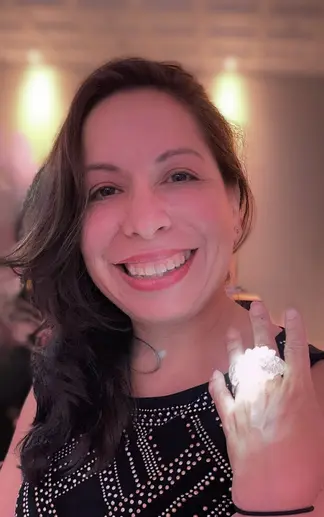
Carolina Castro is an Earth Science educator with over 23 years of experience in the New York City Public School System. She is a New York State Master Teacher and a Math for America Fellow, recognized for her leadership, innovation, and commitment to equitable science education.

She currently teaches high school Earth Science at Comprehensive Model School Project, a 6–12 Title I school located in the South Bronx, where she also serves as science department lead. In addition, she works as an Educational Specialist for the New York State Education Department, playing a key role in developing the new Regents Earth and Space Science exam aligned to the Next Generation Science Standards. 

A former adjunct professor at Brooklyn College, Carolina leads teacher workshops across New York City and presents at state and national conferences, focusing on best practices for implementing science standards in the classroom. 
Her work has been recognized with honors including the Regeneron STEM Teaching Fellowship, the Astor Fellowship, the Practical Science Institute NGSS Fellowship, and the European Geosciences Union GIFT Award. In 2024, she participated in the JOIDES Resolution ocean drilling expedition from Iceland to Amsterdam, an experience that deepened her scientific expertise and enriched classroom instruction. 

She has secured over $25,000 in grants to support a student-run hydroponics lab that provides hands-on learning in sustainability, food systems, and environmental science—offering students authentic opportunities to apply scientific practices while addressing real-world challenges in their community.

Jessica Stellmann - Far Western Section, California
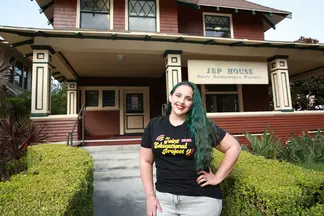
Jessica Stellmann is the Assistant Director of STEM Education Programs for the University of Southern California's (USC) Joint Educational Project (JEP) where she oversees and provides operational support for the Young Scientists Program, the Medical STEM Program, and the WonderKids After-School Program. She develops lesson plans and activities for K-5 classrooms as well as the STEM Education Programs' reflective essay curriculum and workshops centered on pedagogy and inclusion of diverse learners, all of which aid the programs' undergraduate teaching assistants to grow as educators. She also works with Director Dieuwertje Kast and USC faculty members to develop curriculums based on faculty research subjects and findings. She studied Geophysics & Planetary Sciences (BA) at Boston University and completed her MS in Geological Sciences at the University of Southern California.

Dana Smith - North Central Section, Minnesota
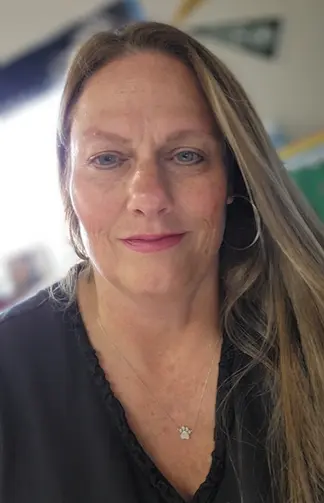
Dana Smith is a middle school science teacher at Bemidji Middle School in Bemidji, MN. Dana earned her Bachelor's and Master's degrees from Bemidji State University. She has been teaching science for 27 years at the middle and high school levels. She is the current Earth and Space Science Discipline Director on the Minnesota Science Teachers Association Board of Directors. One of Dana's passion projects is professional development. Dana is the coordinator of ESTEP (Earth Science Teachers Education Project), a professional development program for Minnesota science teachers. ESTEP is generously grant funded through Minnesota's Environmental and Natural Resources Trust Fund. ESTEP offers summer workshops around the state focusing on place-based, earth and environmental science, as well as online courses and webinars to help teachers enhance their earth and environmental science content knowledge, and three-dimensional teaching and learning strategies to bring student sensemaking into their classrooms. 
 
Dana is also passionate about facilitating opportunities for student scientists to practice their skills and deepen their knowledge, as they investigate and make sense of authentic, local Minnesota phenomena. Her hope is that students can see themselves as practicing scientists, and build their academic confidence so they can dig deeper for understanding by questioning, investigating and collaborating with one another to discover connections and meaning in our natural world. When Dana is away from school, she is learning more about Minnesota's amazing geology, and natural resources. She is fascinated by the stories that rocks tell! She usually has a couple of rocks in her pocket, and she loves to share them, and their stories with her students.

Greg Stott - Northeastern Section, New Hampshire
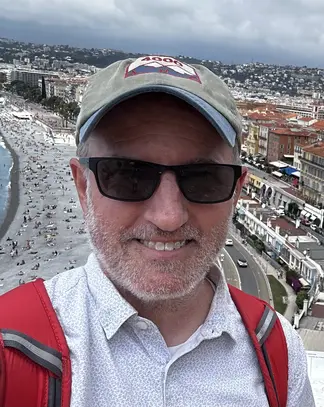
Greg Stott has been teaching since 1997. For the last 23 years he has been teaching eighth grade Earth Science in New Hampshire. Stott obtained a bachelor's degree in marine biology from Millersville University of Pennsylvania and a Master's of Education Degree from Plymouth State University in NH. 

During these years, he would take advantage of opportunities that would further his interests in geology. He is a believer in Placed Based Learning and hopes to instill that interest in others. Wherever you are on Earth, there is something to learn. He would attend the Geological Society of America conferences and even had the chance to present at the American Geophysical Union's Fall Meeting. Stott spent one summer break as the Geoscience Teacher in the Park (GTIP) at Mount Rainier National Park, mapping a glacial river with the park's geologist. At his current position, he has helped to amass a huge rock, mineral, and fossil collection for his students. 

Greg is fortunate to work in a district that hosts Dartmouth College and the Cold Regions Research and Engineering Lab (CRREL). He has made several partnerships with each institution. His favorite was the "Adopt a Buoy Project" with CRREL. The project collected a decade of climate data from a weather station on school grounds. Students could use the data to investigate an original question of their own with the help of Arctic scientists. 

Stott was awarded the Christa McAuliffe Sabbatical award from the New Hampshire Charitable Foundation last year. One product that came out of his time is the documentary, "The Last Ice:Glacial Lake Hitchcock". It covers the last ice age's effects on the Connecticut River Valley where he lives. He hoped to share what he learned in his studies of local geologic features. The film is located at www.glaciallakehitchcock.com.

Emily L. Carson - Pacific Northwest Section
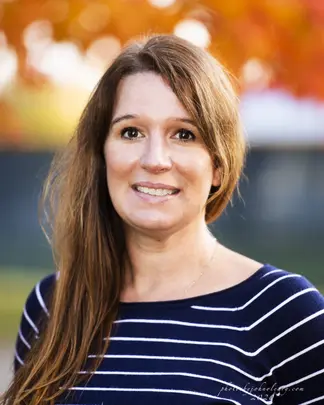
Emily Carson has been teaching high school science for fourteen years. Prior to her teaching career Emily worked as a consulting professional geologist for fourteen years. Emily holds a master's degree in geological sciences from the University of Oregon and is a nationally board certified Earth and Space Science teacher, and has several citations and publications. She is a coach with the MJ Murdock Charitable Trust Partners in Science Program supporting current high school science teacher partners in their research and teaching practice, and is a Murdock Exemplary Teacher award recipient. 
 
At Olympia high school she teaches the fundamentals of Earth Science in her physical science, and college in the high school astronomy and geology classes. Emily is the advisor for the Earth Corps Club; the club maintains native plants in their 1.5-acre forested kettle outdoor learning space, and works at the WSU Meyer's Point Environmental Field Station to support the restoration of the property from cattle land to a 100- acre property with native species. Outside of class she involves her students in field exploration and sampling of subfossil trees in and around the Puget Lowland, correlated to ground shaking on the Seattle Fault Complex. The field techniques used by students in the field translate back to the classroom, where students are taught by and learn from their peers in the outdoor learning space,a forested kettle. Students develop practice of tree coring, and related processing, soil sampling, and forest health, all hands-on student exploration and data collection. 
 
In her teaching she strives to provide a learning environment driven by students, and encourages questioning, and collaboration. Student engagement and success in the classroom leads to more curious, life-long learners. She knows her students learn better and understand more when provided with hands-on inquiry-based, student-driven explorations. Her goal is to foster curious minds and further critical thinking skills and understanding of the processes that shape our natural world.

Heidi Bankoff - Rocky Mountain Section, Colorado
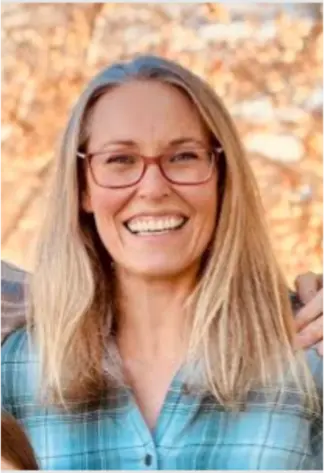
Heidi Bankoff began her teaching career through the United States Peace Corps, serving in Bolivia for three years. She holds a bachelor's degree in Ecology and Environmental Biology, a Post-Baccalaureate in Secondary Science Education, and a Master of Arts in Physics Education. 
 
Over the course of her career, Heidi has taught a diverse range of subjects, including adult literacy, health and nutrition, Spanish, photography, chemistry, physics, biology, electricity/electronics, and energy industry fundamentals. However, her greatest passion lies in Earth Science, a subject she has taught for 13 years. 
 
In addition to teaching Earth Science, Heidi leads the Energy Career and Technical Education (CTE) Pathway, offering a variety of courses designed to prepare students for careers in the energy sector and for postsecondary educational opportunities. 
 
Her most rewarding classroom moments come during labs and hands-on activities, when students collect data and draw their own conclusions about natural phenomena. She feels fortunate to teach in a region with a rich geologic history, where students can directly connect classroom concepts to the natural world just minutes from home. Heidi is dedicated to inspiring a generation of students who love science, value learning, and are committed to being thoughtful stewards of the environment.

Stacy M. Ferrell - South Central Section, Texas
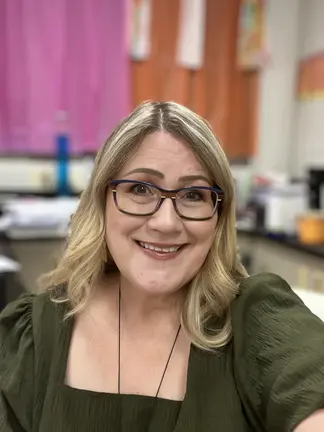
Embarking on a teaching career later in life, Stacy Ferrell took a non-traditional path to get here, but she wouldn't trade it for the world. After raising three amazing children and now cherishing six beautiful grandchildren, Stacy felt a calling to do more. So, she took a leap of faith, left her previous career at Texas A&M University, and returned to school to pursue her bachelor's degree. At the age of 55, Stacy proudly graduated from SFASU, ready to make a difference. For the past six years, she's had the privilege of teaching in Bryan ISD, a Title One school district where her classes are filled with students of diverse needs. Many of her students are at-risk living in a community of generational poverty. They face challenges of poverty, homelessness, food scarcity and a wide range of traumas. It's here in her community and Bryan ISD that she found her true purpose: giving back to her community by investing in her students' lives. Stacy firmly believes in raising the bar on expectations and holding herself and her students accountable, instilling in them her personal motto: "You can have excuses, you can have success – but you can't have both." Her passion for learning about geology was ignited during a transformative trip with TAMU G-Camp in the summer of 2023, which took her through the geological wonders of Texas, Colorado, and New Mexico. Exploring sites like Bandelier, White Sands, and the KPG boundary, along with many others, allowed her to fall in love with geology. Now, her students eagerly share their rocks with her and have a blast testing their properties with her ever-ready rock test kit. Stacy is incredibly grateful for the amazing teachers, principals and instructional coaches who mentor her by guiding her along the way. As the oldest of five siblings and a first-generation college graduate from humble beginnings, Stacy understands the value of education and the sense of accomplishment it brings. She aspires for her students to experience the same empowerment and appreciation for the world around them. Looking ahead, Stacy is thrilled to join the 6th Grade Aspire Academy in the coming school year, where she can share all the things that make her nerdy heart happy – rock collection and all! She dreams of equipping her students with the tools and the vision to look beyond the surface of landscapes, revealing the hidden stories etched into the Earth over millions of years while considering the vastness of time and the forces that have shaped our world.

Rebekah L. Stanton - Southeastern Section, Tennessee
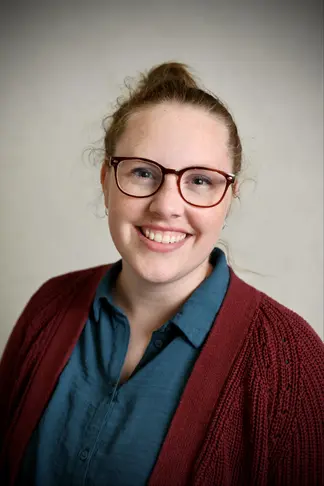
Rebekah Stanton is in her fourth year of teaching at the School for Science and Math at Vanderbilt (SSMV), where she shares her passion for earth sciences with high school students from all over Nashville, Tennessee. Rebekah began her introduction to earth sciences with a B.Sc. (Hons) in Coastal Marine Biology from the University of Hull, UK. As a visiting scholar at the University of Sheffield, Rebekah researched icebergs off the coast of Antarctica. For her Ph.D. in Wildlife and Wildlands conservation at Brigham Young University in Utah, Rebekah studied the recovery of landscapes following wildfires in both the Great Basin and Mojave Deserts. The vast expanse and the red rocks of the desert still bring Rebekah intense joy. 
 
Throughout graduate school, Rebekah wanted to learn from and share knowledge with everyone. Rebekah took steps to improve her teaching, taking classes and thinking carefully about the people who had sparked her joy of learning. Working with the high school students at the SSMV has been a perfect blend of sharing her love of earth sciences with others and inspiring others to discover things for themselves. Through a dynamic, hands-on, experiential approach to teaching, Rebekah has worked closely with students to encourage them to ask questions and understand that the most important part of being a scientist is to be curious. 
 
Rebekah also loves research and plays an active role in the Morgan Antarctic Research Group at Vanderbilt University. She recently returned from a field season in the McMurdo Dry Valleys in Antarctica. She collected samples from glacial tills to study how the valleys were formed and to dig deeper into the microbial ecologies of one of the harshest environments on earth. As always, the plan is to build curricula to include the students in this learning experience.

State/Province Winners

Shawn Schlumpf - Alabama
Shawn Schlumpf is a middle school science teacher at Grand Bay Middle School in Grand Bay, Alabama. He teaches 6th grade Earth and Space science and has been teaching for 7 years. He has been awarded the Golden Apple Award by WKRG News 5 after being nominated by a coalition of his students. He has a Master in Education for General Science, and a Bachelor of Science in Special Education. Both degrees were earned through the University of South Alabama in Mobile, Alabama. He believes that, as an educator it is imperative that the needs of every student no matter their disability or exceptionality are met consistently. The physical engagement of students in the curriculum makes students want to learn and come to class daily. Creating an environment that fosters the development of young scientists should include their ability to physically interact with the information they are learning.

Eileen Fennelly - Georgia

Eileen Fennelly is a Lower School Science Lab teacher at The Mount Vernon School in Sandy Springs, Georgia. She has taught for more than twenty years. Over the past 12 years she taught in the Science Lab, bringing science to life through expeditions in and around Atlanta and the Chattahoochee River. She sponsored the Tree Club which lead to a recognition from the Arbor Day Foundation. 

Her philosophy is inspired by her time teaching and studying in the Reggio Emelia schools as a philosophy that children are capable and responsible learners. She is a graduate of FSU.

Fred Fortman - Illinois 
Fred Fortman is a high school science teacher at Geneva High School in Geneva Illinois. This is Fred's 20th year at Geneva after 3 years at Addison Trail High School. He has coached high school baseball in all but 4 of those years. Fred studied Geology at Augustana College and earned a Masters Degree at Northern Illinois University. Fred strives to bring Geology into the classroom by bringing samples he has collected from around the world into his students hands. His wife, Jeannie, knows to always bring along an empty suitcase on trips because it will soon get filled with rocks and minerals from wherever they go.

Alisha Halford - Mississippi 

Alisha Halford teaches 5th grade math and science at Ackerman Elementary School in Ackerman, Mississippi. She has been teaching for over 15 years. Alisha earned an associate's degree from Holmes Community College, a bachelor's in Elementary Education from Mississippi State University, and is currently pursuing her master's at Arkansas State University.  

Her teaching philosophy centers on inclusivity and cultural responsiveness. She believes every student brings valuable experiences to the classroom and strives to create a space where all voices are heard and respected. Alisha emphasizes student engagement through cooperative learning and project-based activities that encourage curiosity, collaboration, and critical thinking. 

Professional development has shaped her instructional approach. Her graduate studies and collaboration with peers have deepened her commitment to relevant, student-centered learning. One highlight includes leading a STEM unit that inspired a student-led recycling program at her school. 

Outside the classroom, Alisha coaches cheer for the Youth Choctaw Chargers and leads Bible drill at her church. She is married to her husband of 15 years and has two children.

Mary Beth Paladino - Nevada 
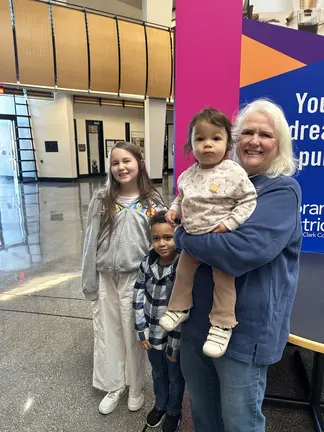
Mary Beth Paladino has devoted over twenty years to the Southern Nevada Gem and Mineral Society, where she has led the Kid's Club Merit Badge program and fosters a love of geology among young learners. A passionate earth science educator, she has spent more than two decades inspiring students and community members through hands-on learning experiences. As a longtime badge coordinator for Boy Scouts in the Las Vegas area, Mary Beth has guided countless Scouts through the geology badge, attending pack meetings and working with over a dozen packs to build an appreciation for earth sciences. Mary Beth also volunteers at annual Clark County Science Fairs, where her rock and mineral demonstrations spark curiosity and excitement. In addition to her work with scouting and science fairs, she leads geology demonstrations at branches of the Clark County Library District, including creating a special obsidian presentation to enhance a rocks and volcanoes theme. Through all her efforts, Mary Beth Paladino continues to inspire a lasting passion for geology in young people throughout her community.

Carrie Jones, North Carolina 

Dr. Carrie Jones is an 8th grade teacher at Dillard Drive Magnet Middle School in Raleigh, NC. She has taught for 26 years, 19 of those were Earth/Environmental Science at the high school level. She is an Adjunct Professor at East Carolina University in the College of Education. Dr.Jones currently serves on the National Science Teachers Association as the Middle Level Division Director. Last year she received the 2024 American Association of Chemistry Teachers' Teacher of the Year and was a 2024 MENSA Gifted Education Fellowship recipient. 
 
College degrees include: Biology(B.S.) Ohio State University; Science Education (M.Ed) Ohio State University; Science Education (Ph.D.) North Carolina State University; Educational Leadership (M.Ed.) University of Cincinnati; Biology (M.S.) Clemson University. Dr.Jones is currently pursuing a degree in Special Education (Academically Gifted) from the University of North Carolina-Charlotte and expects to graduate in 2026. She is National Board Certified in Adolescent/Young Adult Science. 
 
Dr.Jones encourages her students to discover STEM through the activities they already engage in as part of their everyday lives and facilitates unique clubs (Kitchen Chemistry, Jewelry, Lotions & Potions, and Animal Science), where middle schoolers have the freedom to be creative and make discoveries through the process of trial and error. Through this, students will engage in practices that encourage a growth mindset. 
 
According to Jones, "One of the most important things we can teach students today is how to innovate. We don't know what the world holds 10, 20, 30 years down the line, but in preparing students for future problems, they must be able to think outside the box." Dr.Jones' approach to the field of education is characterized by her outside-of-the-box thinking. Not only was it her idea to launch a number of innovative STEM clubs for students, but she also sought out grants to enhance their experiences.

Dr. Angie Thomas - Oklahoma 
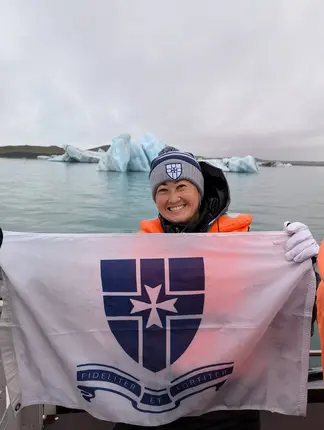
Dr. Angie Thomas is a passionate Earth Science teacher, mom, and lifelong learner who believes science should be both meaningful and fun. Whether leading a fossil dig in Colorado, exploring volcanic landscapes in Iceland, or planting cucumbers with students in the school garden, she strives to make science real, relevant, and empowering. Her favorite role is guiding students to discover how their actions can make a difference by connecting learning with environmental action. After a successful career in aerospace, she has spent more than a decade inspiring students in the classroom. Her classroom is hands-on, project-based, and student-centered, where she encourages curiosity, expects critical thinking, and celebrates kindness.  

Outside the classroom, Dr. Thomas is a mom who loves camping, hiking, and traveling to National Parks with her husband and three sons. She brings that same sense of wonder and adventure into her teaching, always seeking ways to connect science to the real world and help students see themselves as scientists and stewards of the Earth. 
Dr. Thomas attributes much of her success to her amazing school community, including supportive Science Department leads, administrators, and colleagues. She feels truly valued in an environment where teachers are respected as professionals, their voices are heard, and they are given the freedom to pursue their passions in education.

Amy Umbarger - Oregon 
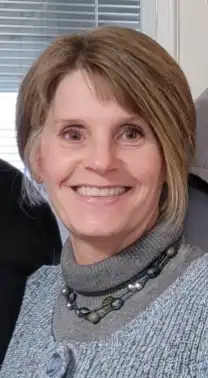
Amy Umbarger joined the teaching profession in 1995 as a junior high, then middle school, life science teacher in Pendleton, OR. She left the classroom to raise her family in 2002 and returned in 2007 part time as the entire high school science department in Echo, OR. Here she expanded her repertoire teaching Biology, Advanced Biology, Chemistry, and Earth and Space Science. In 2014 she rejoined the Pendleton School District. At Pendleton High School she taught multiple disciplines and facilitated the implementation of new curriculum; one being Earth and Space. She strives to create unique hands-on lab experiences for her students, a hallmark of her classroom and teaching philosophy. She aims to foster young problem solvers that contribute to society. She works to lead by example, extending her learning beyond the classroom and volunteering regularly in her community. Her students feel supported, respected, and encouraged by her approach. She earned Teacher of the Year in 2010 in Echo and the Crystal Apple Award, a regional teaching honor in 2014.

Carol Ochsner - Wisconsin 

Carol Ochsner has been teaching geology, chemistry, and physical science at Monroe High School for almost 30 years. Carol earned her broadfield science in education degree from the University of Wisconsin at Whitewater and followed that with a master's degree in teaching physics from the University of Wisconsin at River Falls. 

Carol's philosophy is that everyone can learn and everyone is a scientist. In her hands-on classroom, she has been developing and adapting curriculum so that it is challenging yet accessible to ALL students including students with disabilities and English language learners. Carol is a true team player with all of her colleagues 
She believes that professional development is vital to staying relevant in the classroom. To that end, every summer she participates in several opportunities including a Wyoming dinosaur dig with UW-Madison, research fellowships, classes and content area workshops. For the last 8 years, she has also been an instructor with the Joint Science and Technology Institute, a national summer STEM camp. 

Carol has also been awarded the peer-nominated Monroe Lamp of Learning and the student-nominated Monroe Impact Award.

Kyauna Turner - Washington

No information provided by awardee.