
Earth Science Week 2026: Critical Minerals for a Thriving Society
This page was created for AGI's 2026 Earth Science Week, October 11-17
We've selected these resources for you from our Teach the Earth collection and other projects we sponsor because they are high-quality, reviewed teaching resources that align with this year's theme: Critical Minerals for a Thriving Society.
Visit AGI's Earth Science Week website for a description of the theme and more information.
Like what you see here? Find out more about NAGT and join us today!
How do we teach about critical minerals and geoscience?
Many of our energy resources come from the Earth, and those resources are unevenly distributed on Earth. The concepts of geoscience help us make predictions about where we can find critical minerals, how we can extract them safely, and the impact of their use and extraction on Earth and humans. Teaching about critical minerals is a great opportunity to incorporate data explorations, modeling, engineering activities, making predictions, and communicating results to others.
Jump down to: Featured Resources | Critical minerals in the NGSS | Additional resources for K-12 teachers from NAGT
Featured Resources
NAGT's Teach the Earth portal is a way to access activities submitted by individuals through workshops and on their own. These featured resources have been selected from the Teach the Earth collection for particular relevance to this year's theme.
Grades 9–12 resources
![[reuse info]](/images/information_16.png)
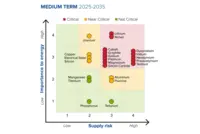
This active learning activity has students working in small groups to understand the geologic context, global sources and usage of a specific metal. Metals considered are Ni, Li, Cr and REE, as well as a pre-work example concerning Cu. Students work together to interpret graphs and maps as well as understand in what geologic environments these metals are formed.
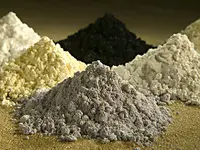
This activity combines elements of role-play, jigsaw, and gallery walk activities to introduce students to critical minerals, their place in the context of geology, their societal and economic importance as well as environmental and human health impacts. Students become experts in one critical mineral/element. In small groups and as a class, students report and reflect on different aspects of their elements.
![[creative commons]](/images/creativecommons_16.png)
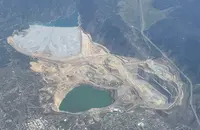
This module combines learning about rocks and minerals, how these become products students use, methods of mineral resource discovery and extraction, and the impact of mineral resource use. This module frames key geoscience concepts in the context of societal issues while also asking students to confront human issues such as environmental justice, economics, personal choice, and politics that may arise due to obtaining, transporting, trading, using, and disposing of natural resources.

This case study involves class discussion about (a) the environmental concerns of developing a new industrial project (in this case, a new mine in Minnesota), and (b) the ethics of communicating those impacts, both between industry and the public, and a scientist and the public. The first part of the discussion ties into previous class instruction on sulfide mining and impacts.
Critical minerals in the NGSS
Mineral resources and human activity are prominent in the performance expectations of the Next Generation Science Standards.
High school performance expectations
Earth and space science: Earth and Human Activity
- Construct an explanation based on evidence for how the availability of natural resources, occurrence of natural hazards, and changes in climate have influenced human activity. (HS-ESS3.1)
- Evaluate competing design solutions for developing, managing, and utilizing energy and mineral resources based on cost-benefit ratios. (HS-ESS3.2)
- Create a computational simulation to illustrate the relationships among management of natural resources, the sustainability of human populations, and biodiversity. (HS-ESS3.3)
- Evaluate or refine a technological solution that reduces impacts of human activities on natural systems. (HS-ESS3.4)
Middle school performance expectations
Earth and space science: Earth and Human Activity
- Construct a scientific explanation based on evidence for how the uneven distributions of Earth's mineral, energy, and groundwater resources are the result of past and current geoscience processes. (MS-ESS3.1)
- Apply scientific principles to design a method for monitoring and minimizing a human impact on the environment. (MS-ESS3-3)
- Construct an argument supported by evidence for how increases in human population and per-capita consumption of natural resources impact Earth's systems. (MS-ESS3-4)
Elementary performance expectations
Earth and space science: Earth and Human Activity
- Obtain and combine information to describe that energy and fuels are derived from natural resources and their uses affect the environment. (4-ESS3-1)
- Obtain and combine information about ways individual communities use science ideas to protect the Earth's resources and environment. (5-ESS3-1)
Additional resources for K-12 teachers from NAGT
Professional development
Our curated collection of K-12 professional development opportunities can help you find what you need to implement the NGSS in your classroom.
Dorothy Stout Professional Development Grants: Dottie Stout was the first female president of NAGT and was active as a strong supporter of earth science education at all levels. In honor of Dottie's outstanding work and lifelong dedication to Earth Science Education, NAGT awards grants to faculty and students at 2 year colleges and K-12 teachers in support of the following:
- Participation in Earth science classes or workshops
- Attendance at professional scientific or science education meetings
- Participation in Earth science field trips
- Purchase of Earth science materials for classroom use
Grants of $750 are made annually in three categories: Community College Faculty, Community College Student, and K-12 Educator. For more information about the award visit the Stout Grants page.
Awards
The Outstanding Earth Science Teacher (OEST) awards are given for "exceptional contributions to the stimulation of interest in the Earth Sciences at the pre-college level." Any teacher or other K-12 educator who covers a significant amount of earth science content with their students is eligible. For more information about the award and to submit a nomination visit the OEST Awards page.