Volume 14, Issue 4| Winter 2025
Foundations
NEWSLETTER OF THE NATIONAL ASSOCIATION OF GEOSCIENCE TEACHERS GEO2YC DIVISION
![[creative commons]](/images/creativecommons_16.png)
In this Issue:
- President's Column
- Funding opportunities - apply for support for your ideas
- STEMSEAS 2YC faculty cruise coming in May 2026
- NAGT updates - position statements open for comment
- Geo2YC wants to hear from you
- Geo2YC pencils
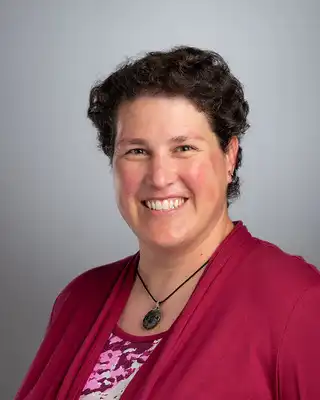 Beth Johnson, 2025-2026 Geo2YC President
![[reuse info]](/images/information_16.png)
President's Column
Beth A. Johnson, University of Wisconsin-Oshkosh
Happy End of the Semester to you all! Good luck to all those still in the thick of grading. In my first column as President of the Geo 2YC Division, I wanted to take some time to reflect on a recent period of great change that I hope will be a lesson I can carry forward into the future. I have long said that as an instructor, I needed to constantly remind myself of what it's like to be on the other side of the desk. But I was recently blessed with a great lesson and a reminder about the people I would find there.
In the many years that I taught Historical Geology to my students at my 2YC, I always emphasized to my students that Geology was all about change. Sometimes, those changes were small and incremental but accumulated over a long period of time to change the face of what was there before. Such is the lesson of uniformitarianism. Other times, those changes were large and drastic, completely reshaping the landscape in the space of a few heartbeats to produce something new – not bad, just new. But both of them together help to shape the world we live in.
For me, the last year has been one of drastic changes, with the closure of my beloved 2YC and the transition to teaching at a 4YC again. The steady ground I'd had beneath my feet was gone, and I had to go through a steep learning curve to adapt to my new reality. Small class sizes? Gone.The rock lab I had built? No more. The curriculum I had developed? Shelved. Even the fact that I was no longer a department of one was a huge change. And it was hard. A catastrophe had reshaped my landscape to produce one that was new.
But what stayed the same was the students. These new-to-me students were still doing things like flaking out about assignment deadlines, skipping labs, emailing to beg for extensions, and so on. Trust me, there is a certain amount of comfort in knowing that students are students no matter where you go! But these students were also showing extraordinary compassion and understanding, having been through their own recent life changes where they had left behind the schools they had known to start afresh in the more challenging world of higher ed. Knowing that I was new to the campus and the courses I was teaching, they were generous with their time and knowledge of the department, they helped me find tools I needed, they left messages of encouragement on my office door, and they gave me their patience and flexibility. We as instructors spend so much time discussing how we can help students in times of transition, but we spend significantly less time discussing how they have helped us.
So, thank you, students, for your patience when we get behind in our grading.
Thank you for laughing at our geology puns. That helps keep us grounded. 😉
Thank you, that one student who always nods along with what we are lecturing on in class. (Seriously, you have no idea how much that helps.)
Thank you for making sure that no one at your lab table works alone unless they want to.
Thank you for showing up for those 8 AM field trips on Saturdays AND for jumping in to complete the tasks so the field trip is worth sacrificing time on the weekend.
Thank you for showing up to class even when you didn't want to.
Thank you for helping your classmates understand the assignment.
Thank you for asking questions even when you thought others might think you were stupid for asking them.
And remember, no matter what happens – even if the school is closing down around you – we are still there for you and to give you the best possible education we can.
Our educational landscape is changing. But many things have changed on Earth over the last 4.6 billion years. And yet, like our students, it is still there. So, on this note, I take my lesson from the Earth and say this: Bring it on. My students and I are resilient in the face of change.
Do you have great ideas that need funding? Let us help you apply to the National Science Foundation
Applying to NSF may seem daunting, especially if you've not done it before. Let us demystify the grant-writing process by participating in the 2026 Developing and Writing NSF Proposals: A Virtual Workshop for 2YC Geoscience Faculty. We are looking for teams (with at least one Earth scientist) who want to move their ideas forward. During this multi-session virtual workshop held this coming April and June, you will learn more about various NSF-sponsored programs and grants, and be led step-by-step through the grant writing and application process with assistance from previous NSF reviewers, former NSF program officers, writing consultants, and 2YC faculty just like you who have submitted successful NSF proposals.
 Show caption
 Hide
HideJoin us on Zoom for an informational webinar on January 30, 2026 (scheduled for 4PM Eastern/1PM Pacific) to find out more details!
Workshop will include:
- Spring session: April 17, 24
- Summer session: June 15, 17, 19; June 22, 24, 26
Workshop conveners: Eric Baer, Sean Tvelia, Becca Walker, Heather Macdonald
If your ideas need smaller funds to get started, you might...
Apply for a Geo2YC Faculty Development Grant! Next deadline is April 15.
The Geo2YC Division is here to support our members financially - we offer $500 to help facilitate workshops or activities for 2YC faculty that are planned by our members, and $100 travel grants for professional meetings, including GSA, AGU, EER, regional NAGT meetings, and more. Historically, we've received few applications - so the likelihood of funding is high - let us help you. Rolling deadlines annually are on April 15 and September 15. Apply here.
Apply for a Dorothy Stout Grant! Next deadline is April 15.
One Dorothy Stout Grant is given annually to a community college instructor ($750) as well as a community college student ($750).
Call for applications - STEMSEAS 2YC Faculty professional development cruise - apply by January 21, 2026
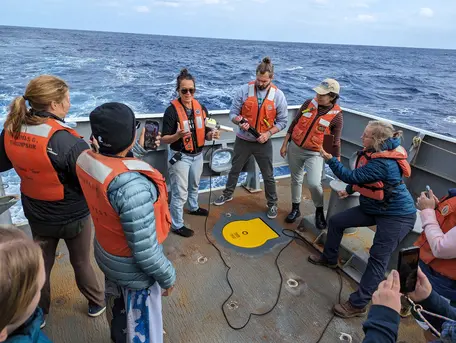
- Are you a faculty member at a two-year college?
- Are you interested in experiencing life at sea aboard a scientific research vessel?
- Do you want to see south-central Alaska, & sail underneath the Golden Gate Bridge?
- Please apply to join Dana Vukajlovich, Marina Halverson, Cristina Cardona, and Callan Bentley on the 2nd STEMSEAS 2YC faculty professional development cruise this May
- May 23-31, 2026 - Seward, Alaska to Alameda, California, R/V Sally Ride
- More information and application (due January 21, 2026) at: https://stemseas.org/2026-2yc-faculty-expedition/
Updates from NAGT

NAGT Annual Report
Please review the 2025 NAGT Annual Report to see what the association has been up to for the last year. You'll find information on membership; committee, section and division reports; ways to support students; and coming professional development opportunities for 2026.
NAGT Draft and Revised Position Statements Open for Comment
Please share your thoughts on the following NAGT Position statements currently open for comment using the links on the pages below:
- Supporting Justice, Equity, Diversity and Inclusion in the Geosciences: To advance Earth science education for all, it is critical that geoscience teaching, learning, and research be inclusive, conducted in ways that recognize and value diverse backgrounds, and are anti-racist, anti-ableist, and culturally responsive.
- Teaching Biological Evolution: The National Association of Geoscience Teachers (NAGT) recognizes that the scientific theory of biological evolution is a foundational and robustly supported concept of science and, therefore, must also be a cornerstone of science education.
Get involved with NAGT Webinars
Check out the schedule for the NAGT Webinar Series! Lots of great opportunities for learning and discussion through these events, and even if you cannot attend, you can register so the link to the recording is sent straight to your inbox. An archive of prior webinars is also available.
Help Save Important Geoscience Education Resources and one of the USA's Largest Fossil Collections
Dr. Don Haas and Dr. Brendan Anderson
The Paleontological Research Institution (PRI) is an essential Earth Science research and educational resource center founded over 90 years ago. PRI reaches 30,000 visitors annually through the Museum of the Earth and hosts extensive, accessible online resources used by more than 1 million educators, scientists, and natural history enthusiasts every year. You may be familiar with some of these resources from PRI's Earth@Home site, including the NSF-supported Teacher Friendly Guides to Earth Science and Climate Change, Regional Guides to Earth Science, the Center for Climate Change Education, the Digital Encyclopedia of Earth Science & Digital Atlas of Ancient Life: Digital Encyclopedia, and virtual collections which see widespread use in remote learning settings. Additionally, teacher professional development programming run by PRI directly trains (or engages) over 1,500 teachers a year, who in turn reach hundreds of thousands of students.
Unfortunately, PRI is on the brink of closure because a donor was unable to fulfill their endowment pledge due to an unforeseen liquidity crisis. PRI can pay off their mortgage and chart a path towards future financial stability if they can raise an additional $1 million by New Year's Eve Dec 31st. Gratefully, many have recognized the importance of this institution and PRI has already raised over $2.3 million towards their goal. Even at reduced staffing levels, PRI has continued to develop new resources and exhibits, continued professional development programming, and maintained collections and research activities.
PRI still needs help to raise the final $1 million by the end of the year. Raising awareness and donations in any amount in this crucial final month can prevent this important educational resource from closing.
Note: PRI hosted the NAGT Eastern Section conference a few years ago. It is a remarkable place combining education and research. The Museum of the Earth is very well organized and maintained, and it houses a wonderful collection of fossils. The online materials developed there are used by many of our fellow 2YC educators. It serves students and teachers in the central New York area that may not have access to larger museums, and it would be a shame to lose this valuable resource. If you are able, please donate whatever you can. Every little bit helps. Thank you.
Research opportunities for students
Here is an up-to-date list of ongoing research programs that are accepting 2YC students! Please share widely with your student network
Hey members - what are you and your students up to?
You may have noticed this issue is a bit light on content - that's because we need to hear from you! Please share your Geo2YC experiences with us - we are always looking for:
- Field Notes - tell us (and show us with pics) about field trips you do with students, especially if it's outside on your campus or in urban areas. If you are conducting field work with colleagues, tell us about that too.
- Geoscience/geology/STEM clubs/professional society chapters - how are you encouraging your students to engage beyond the classroom? Tell us about meetings or outreach events...show us your t-shirts! Consider getting your students to write about it for us.
- Grant projects - have you had a funded grant? We would love to hear about your projects.
- Teaching experiences - have you tried a new activity that went well? Did you try something that totally flopped? Do you love a particular lesson from the SERC collection? Let's talk about what we do best.
- Favorite rocks and fossils - we all have favorite samples in our teaching collections - share yours with us!
Please note, you don't have to write a lengthy, fully perfect article. A picture and a paragraph or two can tell the full story...and don't worry about typos/grammar...your trusty newsletter editor's got you covered.
Where in the world are NAGT Geo2YC pens and pencils?